Whether capsule homes are legal in the United States primarily depends on the state, city, and land-use regulations. Some areas explicitly allow them, while others have strict restrictions due to zoning and building codes.
Whether capsule homes are legal in the US is something you need to understand before purchasing one. If it’s not legal, you won’t be able to live in it even if you buy it. To avoid these problems, you need to understand the local regulations regarding capsule homes before purchasing.
This article will help you understand the legality of capsule homes in the US, common issues, and the purchase and installation process, helping you avoid potential pitfalls.
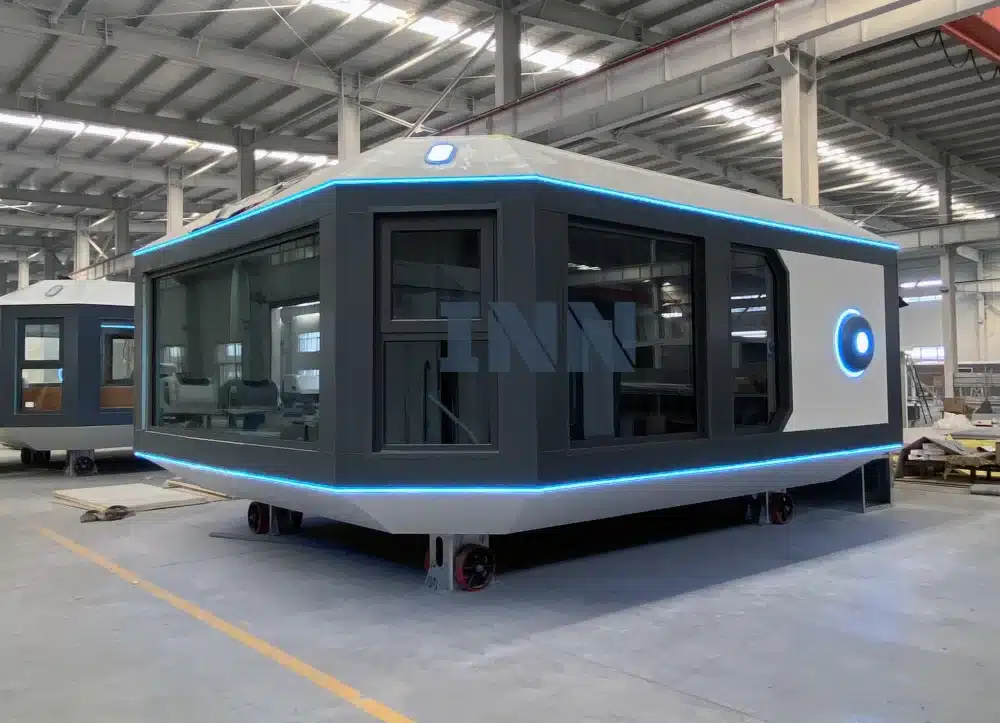
What are capsule homes?
Capsule homes, also known as tiny capsule homes, are typically very small, compactly designed, and modularly manufactured. Their advantages are obvious:
Low cost: Much lower capsule home cost, including purchase and maintenance, compared to traditional homes.
High flexibility: Can be placed on vacant land or combined with wheeled tiny homes for easy mobility.
Energy-efficient and environmentally friendly: Small space, less electricity and water consumption, more suitable for green living.
However, don’t be swayed by the apparent convenience. In the US, the legality of capsule homes is subject to various laws and urban planning restrictions, including factors such as building area, structural safety, and infrastructure access. Understanding these regulations is crucial before buying.
Are capsule homes really legal in the US? Which states allow them?
You might ask, “Where exactly can I legally build a capsule home?” The answer is complex because regulations vary greatly across US states.
Examples of places that allow them: Some cities in California, Texas, and Colorado have modified zoning regulations to allow Tiny Homes or similar forms of capsule homes to alleviate housing pressure.
Examples of places with strict restrictions: Large cities like New York City and Chicago have strict building codes and land use requirements, and fixed capsule homes may not be permitted for long-term residence.
Legality mainly depends on three factors:
Zoning: Whether residential areas allow small or temporary dwellings.
Building Codes: Whether the structure, electrical, fire safety, and waterproofing meet standards.
Infrastructure access: Whether water, electricity, and sewage facilities are available.
Therefore, don’t just focus on how cool the product is; you must first check local regulations, otherwise you may face the risk of demolition.
How can I determine if my area allows capsule homes?
The process is simple, but requires patience:
Check the city or county zoning map
- Check your land use: residential, commercial, or mixed-use.
- Different uses have different restrictions on building area and building type.
Understand building permit requirements
- Zoning regulations don’t allow you to build just anything.
- You need to submit building plans, structural safety assessments, electrical and plumbing plans, fire safety assessments, etc.
Consult a professional
- A registered architect or planner is the most reliable.
- They can help you avoid legal risks and even provide legal design solutions.
Note the difference between mobile vs. fixed structures
- Some cities allow wheeled tiny homes, but have stricter requirements for fixed capsule homes.
- If you plan to live there long-term, a fixed capsule home must meet building codes.
What procedures do I need to follow if I want to buy a capsule home?
Assuming your area allows it and you plan to buy a capsule home, the process is as follows:
Confirm the land and location
Before buying a capsule home in the United States, the first step is not choosing a product, but confirming whether the land where you plan to place it is legal.
You need to first confirm whether the land use meets the local zoning requirements, such as whether residential use, small homes, or non-traditional buildings are allowed. Some residential areas have clear regulations on the minimum building area; if the capsule home is below this standard, it may not be approved.
If you don’t own land yourself, you can also consider leasing vacant land that allows small homes or temporary residences, such as specific tiny home communities or rural areas, which is actually more common in reality.
Apply for a building permit
Even if your area allows capsule homes, you usually still need to apply for a building permit. This step is often the most critical and easily overlooked part of the entire process.
You need to submit a complete building plan to the local government, including the size, structural form, materials used, and the connection methods for water, electricity, and sewage infrastructure. Many cities also require construction drawings and structural safety assessments, and some areas even require separate fire safety approval.
Whether these documents are required depends on the strictness of your city’s requirements for residential safety.
Purchase the capsule home
Only after obtaining or confirming that you can apply for a building permit can you officially purchase the capsule home. Here’s a very real problem: not all capsule home products are suitable for legal use in the United States. You need to choose a manufacturer that complies with local building codes, paying particular attention to whether the product has relevant certifications, such as structural safety, fire rating, and waterproofing performance.
Some capsule homes that look cool in design are actually just “movable pods” and do not meet the building standards for long-term residency. This is something you must clarify before purchasing.
Installation and Acceptance
After the capsule home is delivered to the site, the installation process must strictly follow the plan approved in the building permit. The foundation type, fixing method, and connection methods for water and electricity systems cannot be changed arbitrarily.
After installation, the local government will usually arrange an inspection or acceptance to confirm that the structure, electrical, and fire safety aspects meet safety standards.
Only after passing the inspection can your capsule home be considered legally usable; otherwise, you may be required to make modifications or even be prohibited from using it.
Registration and Taxation
The final step, which many people easily overlook but is very real, is registration and taxation. In some states, permanently installed capsule homes require property registration and payment of property taxes according to local regulations.
If you plan to rent out the capsule home, you also need to understand the local rental regulations and purchase appropriate homeowner’s or liability insurance.
Don’t underestimate this step; proper registration and insurance often determine whether you will encounter legal risks during subsequent use.
What are the challenges of using capsule homes in practice?
Capsule homes look cool, but in practice, you may encounter the following problems:
- Complex legal restrictions: Regulations vary greatly between different states and cities.
- Neighborhood opposition: Community residents may not understand micro-homes.
- Infrastructure costs: Connecting water, electricity, and sewage may be more expensive than you think.
- Financing and insurance issues: Banks may be unwilling to provide loans, and insurance costs may be high.
Understanding these issues in advance can help you avoid detours when investing in capsule homes.
If fixed capsule homes are not allowed locally, are there any alternative solutions?
If your city has strict requirements for fixed capsule homes, you can choose the following alternative solutions:
Tiny Homes on Wheels
If your city has strict restrictions on fixed capsule homes, tiny homes on wheels are often the most realistic and easiest alternative.
Because it is essentially a movable structure, in many areas it is considered a vehicle or temporary dwelling unit, not a permanent building, and therefore does not require a full building permit like traditional houses. For you, this means fewer procedures and shorter approval cycles. Wheeled micro-homes are especially suitable for temporary living, seasonal use, or as a solution for vacations and short-term rentals.
Modular or Detachable Capsule Homes
Another common option is modular or detachable capsule homes. These products are usually classified as temporary structures and are permitted in some cities, provided they are not permanently installed for long-term use.
Because they can be quickly assembled and disassembled, these capsule homes are often used for trade shows, event spaces, temporary offices, or short-term accommodation. If you only plan to use it seasonally, rather than as a long-term residence, this option often strikes a good balance between legality and flexibility.
Shared Land or Cooperative Communities
In some cities that are relatively friendly to micro-homes, there are also shared land or cooperative communities specifically established for capsule homes or Tiny Homes. These communities have usually completed zoning and infrastructure approvals, allowing for the legal placement of small homes.
The biggest advantage for you is that it saves you a lot of hassle with initial approvals and infrastructure connections, while also providing direct access to public services such as water, electricity, and sewage. If you don’t want to deal with complex regulations on your own, this community-based solution is often a safer and more convenient option.
Summary of the Legality of Capsule Homes in the US
Simply put, whether a capsule home is legal depends entirely on the regulations of the state and city where it is located. If you plan to buy one:
- Check zoning regulations first: Confirm that the land use allows for small homes.
- Apply for a building permit: Ensure structural safety and compliance.
- Consult professionals: Reduce legal risks.
- Consider infrastructure and tax issues: Avoid future problems.
Remember, capsule homes are small, but the regulations and procedures involved are numerous. Do your homework, and you can legally and confidently own your own micro-home.