Building a container hotel can cost significantly more than the price of the guest room modules alone. In China, publicly listed factory prices for basic Flat-Pack Container Houses can start at around $1,000, while Expandable Container Houses are listed at approximately $4,800–$9,500, depending on the supplier and specifications.
These prices are for the products themselves, not complete hotel rooms or finished hotel developments. Bathrooms, furniture, air conditioning, transportation, foundations, fire protection, utility connections, and public facilities can all increase the total project cost.
To estimate your budget more accurately, this guide breaks down container hotel costs by module type, guest room configuration, additional construction expenses, and hotel size.
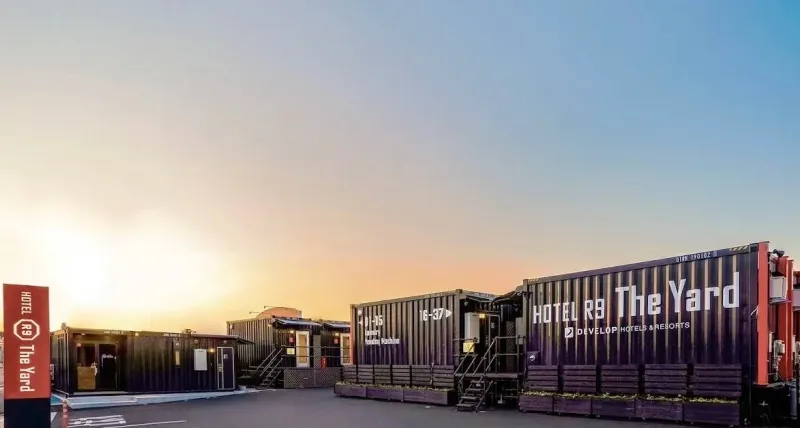
How Much Does It Cost to Build a Container Hotel?
There is no fixed price that applies to every container hotel project. The most important first step is to determine whether you are asking about a basic housing unit, a complete guest room, or the development cost of an entire hotel.
The following provides a reference framework for different budget levels.
Budget Level | Reference Price (USD) | Important Considerations |
Basic Flat-Pack Module | Approximately $1,000–$4,800 per unit | Publicly listed prices from specific suppliers; confirm dimensions, minimum order quantities, and configurations |
Expandable Module | Approximately $4,800–$9,500 per unit | Publicly listed prices from specific suppliers; expansion structures, bathrooms, and interior finishes vary |
Modular Guest Room with Bathroom | Quotation based on specific configurations | Verify whether the toilet, shower, water heater, water supply and drainage, and electrical systems are included |
Fully Finished Hotel Guest Room | Quotation based on product specifications | Clarify the scope of furniture, air conditioning, lighting, bathroom fixtures, and interior finishes |
Total Hotel Development Cost | Estimated according to project design and location | Includes engineering work, public facilities, permits, and other costs beyond the modules |
The Flat-Pack and Expandable prices above are based on publicly available product pricing guides from suppliers. These prices reflect the quotation practices of specific suppliers and do not represent standardized prices across all Chinese factories.
Why not provide a single price for a complete guest room? Because a “container house with a bathroom” may include only basic bathroom fixtures, or it may include complete plumbing, a hot water system, waterproofing, and interior finishes. Two quotations both labeled as hotel guest rooms may differ significantly in their delivery scope.
The differences in total hotel budgets can be even greater. Hotel development cost surveys in the United States can provide reference benchmarks for traditional hotel projects, but they cannot be used directly as quotations for container hotels.
Therefore, when requesting quotations, it is advisable to first clarify the guest room dimensions, bathroom standards, furniture list, purchase quantity, and project location. The resulting figures will then be more suitable for subsequent budget calculations.
What Types of Container Buildings Can Be Used for Hotels?
Container hotels can use various types of prefabricated structures. The choice depends on guest room size, transportation conditions, on-site construction capabilities, and the hotel’s positioning.
Flat-Pack Container Hotel
Flat-Pack container houses are generally characterized by structures designed for convenient packaging, transportation, and on-site assembly. This option is worth prioritizing for projects that require bulk procurement of standardized guest rooms.
If you plan to build 10, 20, or more guest rooms, standardizing room dimensions, window and door positions, and equipment interfaces can reduce design variations and facilitate future maintenance and component replacement.
However, basic Flat-Pack modules may not include all the features required for hotel guest rooms. When requesting a quotation, confirm whether insulation, interior finishes, private bathrooms, air conditioning, furniture, and electrical systems are included. If these items need to be completed locally, the relevant material and construction costs should be included in your budget.
Expandable Container Hotel
Expandable Container Houses use an expansion structure to increase usable floor space, making them suitable for projects that need to balance transportation dimensions with on-site space requirements.
For example, compact guest rooms can be designed around sleeping areas, luggage storage, and private bathrooms. Larger expandable units can accommodate additional lounge areas or family accommodation spaces. The final usable area depends on the specific product’s expansion mechanism and design dimensions, so it cannot be determined solely by looking at the length of the unit in its transportation configuration.
This structure is suitable for resort accommodation projects that require more interior space. However, the expansion mechanism, structural connections, waterproofing, insulation, and on-site installation requirements must still be confirmed before purchasing. A larger expanded floor area does not mean that all products have the same load-bearing capacity or suitability for different conditions.
Shipping Container Conversion
Shipping Container Conversion involves transforming shipping containers or related steel box structures into accommodation spaces.
This type of design can retain a distinctive industrial style, making it suitable for themed hotels, creative accommodation, and unique resort projects. However, standard shipping containers are not finished guest rooms that automatically meet hotel building requirements.
During conversion, the condition of the container, structural reinforcement after cutting openings for doors and windows, insulation, condensation prevention, waterproofing, ventilation, and fire protection requirements must all be evaluated. If the original container requires extensive cutting or reinforcement, conversion costs may increase significantly.
Therefore, when comparing this option, calculate the costs of container procurement, conversion materials, structural engineering, interior finishes, and on-site construction together rather than looking only at the price of the second-hand shipping container itself.
Custom Modular Hotel Units
Custom modular hotel guest rooms are suitable for projects with specific requirements for spatial layout, exterior appearance, and guest experience.
For example, a scenic-area hotel may require large panoramic windows, private terraces, complete bathrooms, and custom furniture. Family suites may need additional beds, more storage space, or separate lounge areas.
These requirements increase design and manufacturing complexity. If every guest room uses a different layout, production efficiency, spare parts management, and future maintenance can also become more complicated.
For larger hotel projects, a practical approach is to use standardized base modules and offer a limited number of optional configurations to accommodate different guest room requirements. This preserves a degree of design flexibility while helping control bulk purchasing costs.
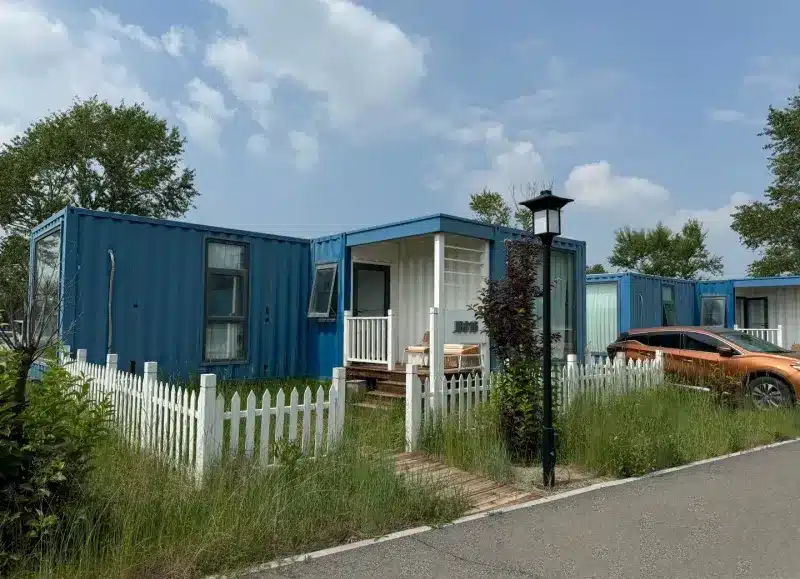
How Much Does a Fully Equipped Container Hotel Room Cost?
A complete container hotel guest room needs to be quoted according to its actual configuration. The price cannot be determined solely from descriptions such as “20ft guest room,” “guest room with bathroom,” or “luxury guest room,” because different suppliers may provide different equipment and interior finish packages.
The following table can be used to classify quotation requirements. Specific prices should be filled in after suppliers provide quotations based on identical configurations, avoiding the mistake of treating basic module prices as prices for complete guest rooms.
Guest Room Grade | Configurations to Clarify | Main Applications |
Basic | Basic structure, enclosure, doors and windows, and included interior finish items | Projects planning to complete part of the interior finishing work independently |
Standard | Private bathroom, air conditioning, lighting, basic furniture, and complete interior finishes | Standard double rooms and small resort hotels |
Premium | Higher-specification doors and windows, custom furniture, upgraded bathroom fixtures, and specialized interior finishes | Boutique hotels and scenic-area resort accommodation |
Family Suite | Larger interior space, additional beds, and storage areas | Family rooms and multi-person accommodation |
This table is not a price list. Its purpose is to ensure that different suppliers quote according to the same standards. After receiving actual quotations, you can add three columns—”Factory Price,” “Delivery Scope,” and “Additional Costs”—to create a genuinely comparable price table.
Basic Guest Rooms: Suitable for Flexible Interior Finishing
Basic guest rooms are suitable for projects with local construction resources that want to purchase some equipment independently.
For example, you can purchase modules from a factory with the basic structure and enclosure completed, then have local contractors complete part of the interior finishing, bathroom installation, or on-site utility connections. This provides greater flexibility in material selection but also requires stronger project coordination capabilities.
If the construction site is far from the supplier, local labor, material transportation, construction schedules, and the risk of rework must also be considered. A lower factory quotation does not necessarily mean a lower final investment.
Standard Guest Rooms: Suitable for Everyday Hotel Operations
Standard guest rooms generally need to accommodate sleeping, bathing, storage, and daily cleaning.
Imagine guests returning to their rooms after a day of travel. They should be able to take a shower, turn on the air conditioning, charge their phones, and place their luggage in a suitable location. These details affect the guest experience as well as daily hotel operations.
When purchasing standard guest rooms, confirm the specific scope of beds, mattresses, air conditioning, lighting, power outlets, bathroom fixtures, and hot water systems. If these items need to be purchased separately, they should be listed individually when comparing prices.
Premium Guest Rooms: Focus on Spatial Experience and Long-Term Maintenance
The price of premium guest rooms is generally influenced by the degree of customization, material selection, and spatial design.
Large glass panels, private terraces, custom furniture, upgraded bathroom fixtures, and higher-specification interior finishes may all increase manufacturing costs. For hotels in natural scenic areas, the orientation of the views and outdoor spaces can also affect the layout.
Premium design does not necessarily mean using the most expensive specifications for every material. Bed comfort, sound insulation, reliable hot water, air conditioning performance, and material durability often have a more direct impact on guest experience and subsequent maintenance.
Which Features Increase Container Hotel Room Costs?
In addition to dimensions and structural design, guest room prices depend on equipment, materials, and the scope of construction. The following items should be clarified before requesting a formal quotation.
Configuration Item | Why It Affects the Price | What to Confirm When Requesting a Quote |
Private Bathroom | Bathroom fixtures, waterproofing, plumbing, and drainage | Whether the toilet, shower, washbasin, and water heater are included |
Air Conditioning and Ventilation | Equipment specifications, electrical power, and installation requirements | Whether equipment, installation, and piping are included |
Thermal Insulation | Material thickness, window specifications, and climate conditions | Whether the design meets the requirements of the project location |
Doors and Windows | Dimensions, glass specifications, thermal insulation, and waterproofing performance | Whether they meet local regulations and project requirements |
Furniture and Storage | Quantity, materials, and degree of customization | Whether beds, mattresses, wardrobes, and tables and chairs are included |
Interior Finishes | Flooring, walls, ceilings, and finishing materials | Material specifications, durability, and maintenance requirements |
Electrical Systems and Lighting | Distribution boards, wiring, outlets, and light fixtures | Equipment lists, interfaces, and applicable standards |
Terraces and External Platforms | Structure, railings, corrosion protection, and waterproofing | Whether they are included in the module price |
A private bathroom is an item that requires particular attention. In addition to the toilet, shower, and washbasin, you need to consider water supply and drainage connections, the hot water system, waterproofing, and on-site connections. For some products, “with bathroom” only means that certain fixtures are provided and does not necessarily indicate that the entire system is complete.
If the hotel plans to operate year-round, insulation, thermal performance, and ventilation are also worth prioritizing. Hot climates require consideration of solar radiation and air conditioning loads, while cold climates require particular attention to insulation, condensation prevention, and heating conditions.
Furniture layout also affects the user experience. Bedside power outlets, luggage storage areas, bathroom drainage, cleaning equipment storage, and equipment maintenance access should all be considered during the design stage. A guest room that is easy to clean and maintain is generally more suitable for long-term operation.
The most effective way to obtain quotations is to include all configurations in the same list and require each supplier to specify whether every item is “Included,” an “Optional Configuration,” or “Quoted Separately.” This is more reliable than comparing only a single total price.
What Additional Costs Should You Budget For?
Container guest rooms are only one part of a hotel project. Even if the modules have already been manufactured at the factory, the site may still require transportation, foundations, MEP systems, fire protection, roads, and public facilities.
Transportation, Customs Clearance, and Lifting
When sourcing from China, transportation costs depend on module dimensions, purchase quantity, packaging methods, shipping routes, destination ports, and the inland distance to the project site.
Flat-Pack products can be evaluated according to their packaging and loading arrangements to determine transportation efficiency. For Expandable products, confirm the dimensions in the folded state, the number of units that can be loaded per shipment, and on-site lifting requirements.
When requesting quotations, distinguish between factory delivery, Free on Board (FOB) port delivery, and other agreed delivery terms. Confirm individually whether ocean freight, port handling, customs clearance, duties, destination delivery, and lifting costs are included.
Foundations and Site Preparation
Site conditions affect foundation and on-site engineering costs.
A level site with good drainage conditions can have significantly different construction costs from a site requiring extensive earthworks, retaining structures, road modifications, or underground utility work. The foundation solution should be determined by qualified local professionals based on soil conditions, structural loads, and relevant regulations.
For resort hotels, you also need to plan pedestrian walkways between guest rooms, parking areas, lighting, stormwater drainage, and landscaping. Even if all guest rooms use prefabricated modules, these site works are not automatically included in the factory quotation.
Water Supply, Drainage, Electricity, and HVAC
Hotel guest rooms require reliable water supply, drainage, electricity, and ventilation systems.
Before purchasing, confirm whether the module’s equipment interfaces are compatible with the site’s utility and electrical systems. Voltage, outlet types, plumbing standards, and equipment certification requirements may differ between countries and regions, so these matters need to be coordinated in advance during the design and production stages.
If the project is located in an area with limited infrastructure, you should also evaluate requirements for wastewater treatment, water storage, electrical capacity upgrades, or backup power supplies. These costs are closely related to site conditions and cannot be calculated using a fixed per-room cost.
Fire Protection, Permits, and Local Building Codes
Container buildings used for hotel operations must comply with the applicable building, fire safety, sanitation, and accessibility requirements in the project location. Specific requirements depend on the building’s intended use, floor area, number of stories, occupancy, and local regulations.
The budget should account for architectural design, engineering reviews, permits, fire protection systems, and necessary inspections. Modular manufacturing can help standardize production, but it does not eliminate the need for local approvals.
Before placing an order, it is advisable to have local design or engineering professionals review the proposed solution and then confirm structural drawings, material documentation, equipment specifications, and relevant certification documents with the manufacturer. This can reduce the risk of discovering that redesign or modifications are required only after the modules arrive on site.
Public Areas and Operational Facilities
Hotels may also require reception areas, laundry rooms, staff spaces, public restrooms, dining areas, and equipment rooms.
These spaces do not automatically become unnecessary simply because the guest rooms use container modules. Smaller projects may combine certain functions through efficient planning, but the design must still reflect the operating model, sanitation requirements, and guest circulation.
Before opening, linens, cleaning equipment, signage, reservation systems, and initial operating funds may also affect the overall investment requirements. These costs should be listed separately from construction costs to avoid confusing the building budget with opening expenses.
What Is the Total Budget for a 10-, 20-, or 50-Room Container Hotel?
The total budget for a container hotel should be calculated item by item based on guest room modules, site engineering, and public facilities. The average development cost of a traditional hotel cannot be used directly as a quotation for a container hotel, nor can the factory module price simply be multiplied by the number of guest rooms and treated as the total project cost.
Calculate Guest Room Procurement Costs Using Module Prices
Consider a simple example first.
Suppose you plan to purchase 10 standardized guest room modules, and the supplier quotes $8,000 per room:
Item | Calculation Method | Amount |
Guest Room Modules | 10 × $8,000 | $80,000 |
Transportation and Lifting | Quoted according to destination | To be confirmed |
Foundations and Site Preparation | Quoted according to site design | To be confirmed |
Water Supply, Drainage, Electricity, and HVAC | Quoted according to the scope of work | To be confirmed |
Fire Protection and Permits | Quoted according to local requirements | To be confirmed |
Public Areas and Other Facilities | Quoted according to project planning | To be confirmed |
The $80,000 in this table represents only the module procurement cost under the hypothetical assumptions. Other costs can only be determined after considering the project location, design plan, and contractor quotations.
How Should You Prepare Budgets for Different Hotel Sizes?
Project Size | Method for Calculating Module Procurement Costs | Additional Items to Evaluate |
5 Guest Rooms | 5 × the quoted price per module | Foundations, utility connections, parking, and permits |
10 Guest Rooms | 10 × the quoted price per module | Transportation, public facilities, and site engineering |
20 Guest Rooms | 20 × the quoted price per module | Bulk transportation, roads, drainage, and fire protection capacity |
50 Guest Rooms | 50 × the quoted price per module | Public areas, infrastructure, and more comprehensive project planning |
This table deliberately does not provide an unverified total price for an entire hotel. Without information about the site, design, and delivery scope, providing an apparently precise total budget could mislead investment decisions.
Why Can the Cost per Room Change as the Number of Guest Rooms Increases?
Some costs can be spread across more units as the purchase quantity increases. For example, standardized design, certain engineering design costs, and some transportation arrangements can become more efficient through bulk planning.
However, other costs may increase as the project grows, including higher-capacity water supply and drainage systems, fire protection facilities, roads, parking lots, and public spaces. A 50-room project cannot simply be considered ten times the cost of a 5-room project, nor will it necessarily have a lower total cost per room.
A more reasonable approach is to determine the number of guest rooms, site layout, and public facilities first, then calculate the total by adding module quotations and engineering quotations item by item.
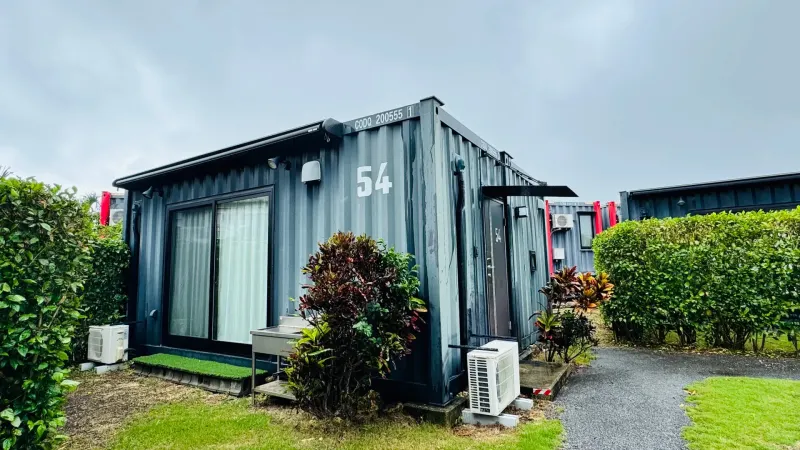
How Can You Reduce Container Hotel Construction Costs?
The key to controlling container hotel costs is to reduce unnecessary customization, repeated construction, and rework rather than simply choosing the product with the lowest quotation.
Standardize Guest Room Designs
If the project plans to purchase 10 or more guest rooms, it is advisable to standardize the basic layout as much as possible.
Standardizing door and window dimensions, bathroom positions, equipment interfaces, and furniture specifications can help improve batch production, on-site management, and future maintenance. If the project requires family rooms or premium suites, a small number of different room types can be added to the standard guest room design instead of making every room completely different.
Finalize Configurations Before Production
Beds, bathroom fixtures, air conditioning, water heaters, outlets, lighting, and interior finishes should ideally be finalized before formal quotations and production.
If equipment is added or the layout is changed after the modules have been manufactured, this may involve structural adjustments, plumbing modifications, additional transportation, or on-site rework. Finalizing configurations in advance allows different suppliers to quote according to the same standards and can reduce subsequent changes.
Choose Modules According to Transportation Conditions
The product structure should be evaluated together with transportation methods and on-site construction conditions.
For Flat-Pack products, check packaging dimensions, loading quantities, and on-site assembly costs. For Expandable products, confirm transportation dimensions, expansion methods, and lifting requirements. For custom modules, verify dimensions, transportation routes, and road restrictions at the destination in advance.
Do not compare only the factory price per room. Transportation, on-site construction, and future maintenance should all be included in the evaluation.
Allocate the Budget to Critical Performance Requirements
Thermal insulation, waterproofing, electrical systems, fire protection, and structural safety directly affect the hotel’s long-term use.
If you reduce initial procurement costs by choosing materials that are unsuitable for the local climate, future energy consumption and maintenance expenses may increase. Fire safety and building compliance should not be postponed until the modules arrive on site.
A more effective way to save money is to optimize layouts, standardize procurement, reduce unnecessary customization, and complete design coordination before production while meeting local regulations and operational requirements.
How Do You Get an Accurate Container Hotel Quote?
If you are preparing to request quotations from Chinese container house manufacturers, it is advisable to prepare a complete project requirements sheet first. Once the purchase quantity, guest room specifications, and delivery scope are clearly defined, quotations from different suppliers will be comparable.
What Information Should You Prepare Before Requesting a Quote?
Project Size
Specify whether you expect to need 5, 10, 20, or more guest rooms, and indicate whether you also need a reception area, restaurant, public restrooms, laundry room, and staff spaces.
Guest Room Types and Dimensions
Specify whether you prefer Flat-Pack, Expandable, Shipping Container Conversion, or custom modular guest rooms. If you have not yet decided, you can ask suppliers to compare different structural solutions.
Guest Room Configuration List
Clarify the number of beds per room and whether private bathrooms, air conditioning, water heaters, furniture, lighting, complete interior finishes, and other equipment are required. Do not simply write “standard hotel guest room,” because each supplier may interpret standard configurations differently.
Project Location
Provide the country, city, and site conditions to help assess transportation, equipment standards, installation methods, and local compliance requirements. Also specify whether you expect factory delivery, transportation assistance, or other project support from the supplier.
Budget and Delivery Schedule
Provide the expected procurement budget, planned production quantity, and target delivery date. If the project will be built in phases, also specify the purchase quantity and schedule for each phase.
How Should You Compare Quotations from Different Manufacturers?
Comparison Item | Questions to Confirm |
Product Dimensions | Does the quotation refer to transportation dimensions or expanded usable dimensions? |
Structure and Insulation | Which materials, thicknesses, and performance requirements are included? |
Bathroom Configuration | Are fixtures, waterproofing, and plumbing interfaces included? |
Furniture and Interior Finishes | What are the quantities, materials, and brands of furniture and equipment? |
Electrical Systems and Water Supply and Drainage | Do they comply with the relevant standards at the project location? |
Transportation Conditions | Which transportation, customs clearance, and on-site costs are charged separately? |
Production Lead Time | How long do design approval, production, and shipment each take? |
Technical Documentation | Can drawings, material documentation, and quality inspection documents be provided? |
Warranty and After-Sales Service | What are the warranty scope and duration, and how are replacement parts supplied? |
It is advisable to compare at least two or three quotations based on identical configurations. If one quotation is significantly lower, first check whether it excludes bathrooms, insulation, interior finishes, packaging, or other critical items. Price comparisons are meaningful only when the delivery scope is consistent.
If the project is located in the United States or another market with specific building code requirements, have local professionals confirm the design and approval requirements before placing an order. The manufacturer’s product documentation can support technical evaluation, but it cannot replace the design reviews and permits required by local authorities.
Conclusion
The cost of a container hotel depends on whether you are purchasing basic housing modules, fully finished guest rooms, or an entire hotel project that includes on-site engineering and public facilities. Publicly listed supplier prices can serve as a starting point for product selection, but the final budget must be based on actual specifications, configuration lists, transportation conditions, and project location.
If you are planning a small resort hotel, a scenic-area accommodation project, or a standardized guest room project, it is advisable to first determine the number of guest rooms, target floor area, bathroom standards, and destination before comparing different modular solutions. What is truly worth comparing is not simply the factory price, but the total investment required for the entire project under identical configurations and delivery scopes.
INNature is a Chinese prefabricated housing manufacturer that can discuss container house, expandable house, and modular guest room solutions according to project requirements. If you are preparing to evaluate a hotel project, you can provide the expected number of guest rooms, project country, guest room configurations, and target delivery schedule to further verify product specifications, factory quotations, and transportation arrangements.