If you are considering using Vanbox to convert an ordinary van into a camper—complete with sleeping, cooking, and travel capabilities—the first question on your mind likely isn’t about the specific features, but rather: “How much does a Vanbox camper actually cost?”
Currently, Vanbox camper cost typically range from $4,800 to over $10,000. Basic configurations start around $4,800, suitable for weekend camping and short trips. A budget of $7,000–$9,000 allows for a more comprehensive setup, including sleeping arrangements, a kitchen, storage, and electrical systems. If you add features like solar power, batteries, water systems, a refrigerator, or vehicle-specific customization, prices exceeding $10,000 are common. Note that the quoted price and the final cost may differ; shipping, customization, and local fees can all impact your actual budget.
If you only plan to go camping occasionally and don’t need a complex RV system, Vanbox’s modular design allows you to focus your budget on the features you truly need. This makes it an attractive option for those who already own a van.
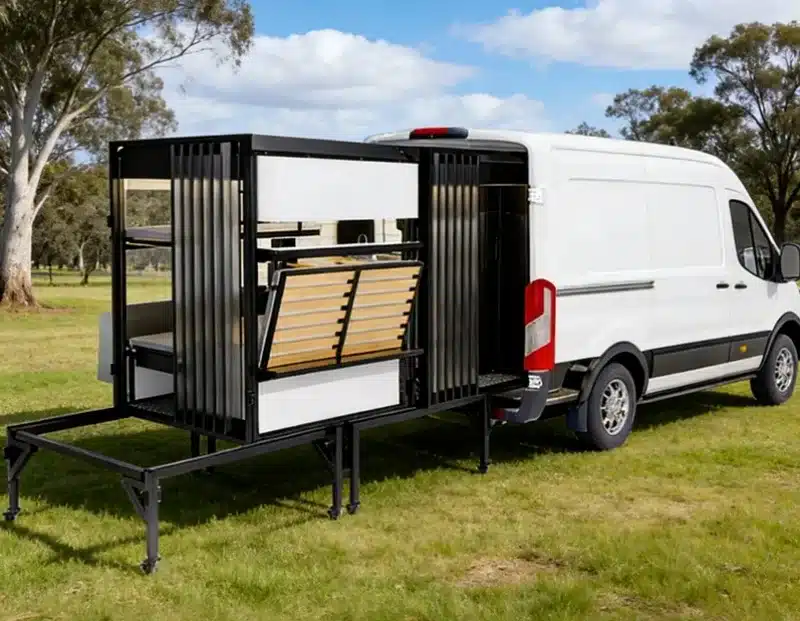
How Much Does a Vanbox Camper Cost?
In terms of actual budgeting, Vanbox setups generally fall into three price tiers.
The $4,800–$6,000 range typically covers basic packages. These Vanbox setups primarily address the two most fundamental needs—where to sleep and where to store gear—making them ideal for weekend camping, short road trips, or occasional outings.
With a budget of $7,000–$9,000, the system becomes significantly more comprehensive. You can incorporate a better-designed kitchen area, increased storage, electrical systems, and a more comfortable sleeping module. This price range is often the best choice if you plan to take frequent long-distance trips with a partner.
If your budget exceeds $9,000, you have a much wider range of options. Solar panels, batteries, inverters, refrigerators, water systems, and personalized layouts can all be integrated into the overall package. For those undertaking extended journeys or off-grid camping, this level of configuration offers far greater practical value than simply adding cosmetic interior upgrades. Here is a point easily overlooked: the starting price of a Vanbox isn’t necessarily the final price you pay. Seeing a base quote of $4,800 doesn’t mean every feature is included. To truly compare prices, you need to determine your configuration first and then look at the final quote.
What Is the Difference Between Vanbox Options Priced at $5,000, $8,000, and Over $10,000?
If you are new to Vanbox, looking at price ranges alone might not be very intuitive. It is easier to understand it this way: your budget essentially determines the kind of camping experience you get.
Around $5,000: The focus is on turning the van into a space where you can sleep
This budget is better suited for casual camping.
You can prioritize a fold-out bed, storage, and basic living modules. Keeping plenty of open space during the day and unfolding the bed at night makes for a very practical layout for weekend road trips.
If you also use the van for hauling cargo, commuting, or transporting equipment, a basic Vanbox is actually a better fit. There is no need to turn the entire vehicle into a heavy-duty RV just for features you use only occasionally.
Around $8,000: Stepping into the realm of comfortable camping
With a higher budget, the real game-changer isn’t just “a few extra cabinets,” but a more complete set of living functions.
You can combine a kitchen, power system, storage, and a superior bed setup. This configuration makes for a much more comfortable experience when two people embark on a road trip lasting several days or even weeks.
The modular approach of the INNature VANbox aligns well with this budgeting logic. You can select specific functional modules based on your travel style, rather than buying a product with a fixed configuration.
Over $10,000: More budget allocated to self-sufficiency
If you plan to stay for several days in locations without campsite facilities, power and water systems become more important than purely decorative features.
Solar panels, batteries, inverters, refrigerators, and water storage systems will make up the bulk of the budget. At this level, the Vanbox is no longer just a sleeping module; it is evolving into a comprehensive mobile living space.
Why Might the Quotes for Two Vanbox Units Differ by Thousands of Dollars?
You might encounter a situation where one supplier quotes $6,000 and another quotes $8,000, yet the products look nearly identical in photos.
This doesn’t necessarily mean one supplier is overcharging. Vanbox units are highly configurable camping modules; a similar outward appearance does not imply identical internal specifications or manufacturing costs. The real price difference often lies in the details you cannot see in the photos.
Even when both feature a “kitchen,” the actual setup can vary drastically
Both Vanbox units might be marketed as having a “kitchen,” but what is actually provided can differ significantly.
A lower-priced option might offer nothing more than a simple countertop and storage space, whereas a higher-priced version could include a sink, water supply system, refrigerator, power outlets, and a complete electrical wiring setup. While both are labeled “kitchen modules” in product descriptions, the actual user experience and manufacturing costs are clearly on different levels.
When comparing quotes, it is best not to rely solely on the names of features listed by the supplier; instead, verify exactly which equipment and materials are included.
Electrical systems are a common source of overlooked price differences
The electrical configuration of a Vanbox also significantly impacts the price.
A basic 12V power system suffices for lighting and a few small devices; however, upgrading to a setup that includes a lithium battery, inverter, solar panels, charge controller, and a comprehensive circuit protection system will noticeably increase the cost.
For weekend campers, a basic power setup may be sufficient. However, if you plan on off-grid trips lasting several days or longer, the value of high-capacity batteries and solar systems becomes much more apparent.
This explains why the price difference between two Vanbox units might be $2,000 or more—the discrepancy often lies not in the unit itself, but in the energy system.
Materials and structural design determine hidden costs
Another cost factor that is difficult to gauge from product photos is the Vanbox’s main structure and internal materials.
A Vanbox is designed for long-term installation inside a vehicle; it must withstand the vibrations of daily driving while balancing weight, strength, mounting methods, water resistance, and durability. If heavier or less durable materials are used to lower the quote, the initial price might be lower, but the product may not be suitable for long-term use.
Weight is a particularly important consideration for vehicles. A Vanbox isn’t necessarily better just because it is sturdier or heavier; one must also consider the vehicle’s load capacity and overall driving performance. A truly sound solution requires striking a balance between structural strength, weight, durability, and price.
When comparing Vanbox quotes, standardize the specifications before looking at the price
If you receive quotes for $6,000 and $8,000, the simplest approach isn’t to automatically choose the cheaper one; instead, compare the two proposals based on identical specifications.
Verify whether the bed, kitchen, electrical system, storage, water system, materials, vehicle compatibility, and shipping costs are consistent. If the $6,000 quote excludes solar panels and batteries while the $8,000 quote includes a complete off-grid power system, then a direct price comparison is meaningless.
What you should really compare is the final price for the same configuration, rather than the starting price displayed by the supplier.
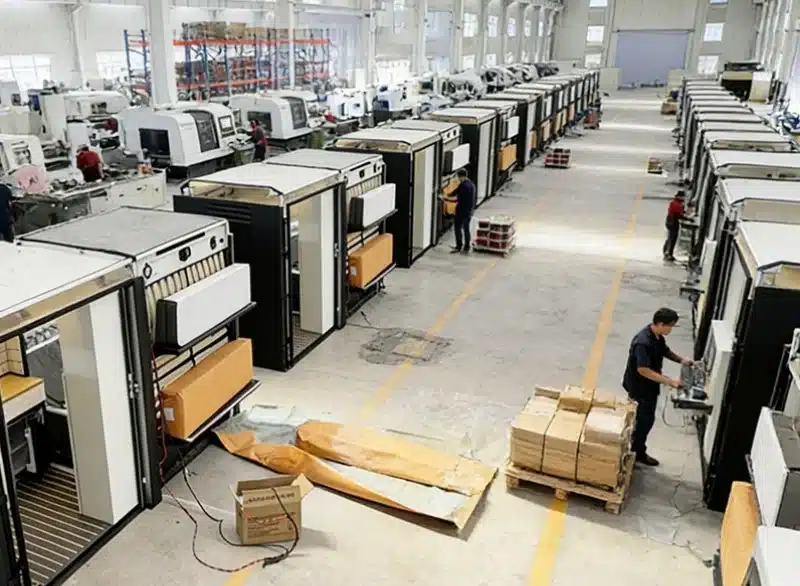
What Is Included in the Vanbox Quote? What Is the Final Purchase Cost?
When creating your budget, view the Vanbox expense as a complete cost chain rather than just a single product price tag.
Base Vanbox price + optional upgrades + customization fees + shipping costs + local charges = actual purchase cost.
The product itself usually accounts for the largest portion of the cost, but it is not the only factor.
Prices are easier to manage if you opt for standard sizes, layouts, and vehicle fitments. Costs will rise as you add equipment such as kitchens, batteries, solar panels, refrigerators, and water systems. Additional vehicle-specific adaptation fees may also apply if your van requires custom dimensions or a redesign of the mounting structure.
For cross-border purchases, confirm shipping methods and costs in advance. Vanbox’s size and weight directly impact packaging and logistics expenses. You should also clarify import duties, taxes, and destination-related fees before placing an order.
This step may seem simple, but it is crucial. What you should really compare is the total cost to get the product in hand, not just the eye-catching starting price displayed on the website.
How Much Should You Budget for a Vanbox Based on Your Camping Style?
Your camping style directly determines the appropriate budget.
If you only go camping on weekends a few times a year, a basic package costing around $4,800–$6,000 will meet your core needs. You primarily need a comfortable sleeping area and a sensible storage layout; there is no need to incur the extra weight and cost of equipment you will rarely use.
If you are planning a long-distance road trip for two, you might increase your budget to $7,000–$9,000. Kitchen facilities, power systems, and storage space become more important; after several days on the road, you will find that a functional storage system is far more valuable than mere decorative additions.
If you prefer visiting locations without campsite hookups (off-grid camping), allocate more of your budget to energy and water systems. Packages priced above $9,000 are generally better suited for these needs, as solar panels, batteries, inverters, and water storage equipment provide greater self-sufficiency.
In other words, instead of asking “How much does the best Vanbox cost?”, ask “What configuration does my camping style require?”
How Do the Van Model and Customization Affect the Price of a Vanbox?
The price of a Vanbox depends not only on the product itself but also on vehicle compatibility and the level of customization, both of which influence the final quote. Common vehicle models like the Ford Transit, Mercedes-Benz Sprinter, and Ram ProMaster usually have well-established fitment solutions; if you opt for a standard layout, the additional costs are relatively limited.
How much does the price vary based on the level of customization?
If adjustments are limited to dimensions and mounting methods for a specific vehicle model, you can usually budget an extra $200–$500 for fitment. If you need to alter the layout of the bed, kitchen, or storage, minor customization might add $500–$1,500. Extensive customization—involving a complete layout redesign, special structural elements, or multiple functional adjustments—could add $1,500 to over $3,000.
Vehicle-specific fitment incurs costs because cargo area dimensions (length, width, and height) and internal features—such as wheel wells, door configurations, and structural elements—vary between van models. Installing a standard “Vanbox” into different vehicles may require adjustments to dimensions, mounting points, or even specific module structures; these changes increase the workload for design and production.
If you own a common vehicle model and have no specific requirements for the interior layout, choosing a proven standard solution makes it easier to control your budget. Conversely, if you wish to completely reconfigure the kitchen, sleeping area, storage, and electrical system to suit your personal travel habits, you will need to factor in the specific costs of customization.
With modular solutions like the INNature VANbox, you can first determine your vehicle and available space, then select your sleeping, kitchen, storage, and power configurations based on your budget. The advantage here is that you avoid customizing for the sake of it, instead allocating your budget to features that truly enhance your user experience.
How Do You Determine Which Vanbox Quote Offers Better Value?
If you have quotes from two different suppliers, don’t rush to choose the one with the lowest price.
First, compare the quotes side-by-side to verify that they are offering the same products.
For instance, if one quote includes the bed, kitchen, battery, and solar setup while the other covers only the main module, a direct comparison of the total price is meaningless. You need to align the configurations before comparing the costs.
Weight is another important factor. A heavier Vanbox isn’t necessarily better; excessive weight consumes the vehicle’s payload capacity and can negatively impact fuel economy and driving dynamics. A reasonable balance must be struck between structural strength and weight reduction.
Finally, consider the mounting method, materials, waterproofing, insulation, and electrical system. For camping modules intended for long-term use, the hidden internal components often warrant more attention than the exterior colors or decorative finishes.
Finally, consider factors such as shipping, delivery timelines, warranties, and after-sales support.
If a supplier offers a price that is a few hundred dollars lower but entails higher long-term costs, that price advantage may be illusory. When comparing Vanbox options, the key metric isn’t simply “who offers the lowest price,” but rather “how much practical value you get for your budget.”
How Much Does the INNature VANbox Cost, and What Can Be Customized?
The INNature VANbox features a modular design; the price is determined by your vehicle model, spatial layout, and functional configuration. You can select features based on your actual needs, avoiding extra costs for functions you won’t use.
Common customization options include sleeping areas, kitchens, storage, and electrical or water systems. For instance, bed size and placement can be adjusted to fit the vehicle’s interior dimensions, storage space can be increased based on the number of travelers, and components like refrigerators, solar panels, batteries, inverters, or water supply systems can be added.
Interior layout is another crucial aspect of customization. Decisions regarding kitchen placement, utilizing the space above wheel arches for storage, and maintaining living space when the bed is deployed will all influence the user experience and the final price.
If you own a common van model—such as the Ford Transit, Mercedes-Benz Sprinter, or Ram ProMaster—the system can be adapted from standard modules; for unique vehicle models or specific spatial requirements, dimensions and structures can be further customized.
With the INNature VANbox, the goal of customization isn’t to pack in as many features as possible, but to strike a reasonable balance between vehicle space, camping functionality, and budget. Defining your vehicle model and primary usage first—then selecting the appropriate modules—makes it easier to find a solution that truly suits your needs.
How Do You Calculate the Final Budget for Your Vanbox?
If you are planning to purchase a Vanbox, the simplest approach isn’t just asking “How much does it cost?” but rather clearly outlining your specific needs.
For example, if you only plan on weekend camping trips, a budget of $5,000–$6,000 might suffice; for two people traveling long-term, a budget of $7,000–$9,000 is appropriate; and if you intend to go off-grid, you should allocate more of your budget to electrical systems, water systems, and related equipment. Once you have determined your budget, please provide details regarding your van model, year, interior dimensions, number of occupants, and primary camping style. You should also specify any particular requirements for the kitchen setup, electrical system, solar power, refrigerator, or water storage.
Only with this information can the resulting quote serve as a truly useful reference.
Vanbox does not offer a “one-size-fits-all” price. A truly fair price is one based on a complete solution tailored to your specific vehicle, usage habits, and configuration requirements.